


back to top
Sponsered
Home Blog Page 2

Peace in the Balance: Trump and Netanyahu Agree on US Backed Plan for Gaza

A close-up of a hand holding a piece of paper with the words "Gaza Peace Plan" on it.
A new US-backed peace plan for Gaza has been agreed upon by Donald Trump and Benjamin Netanyahu

WASHINGTON, D.C. President Donald Trump and Israeli Prime Minister Benjamin Netanyahu announced on Monday, September 29, 2025, a new US-backed plan to end the ongoing conflict in Gaza. The 20-point proposal, presented to Hamas through mediators, details a path for an immediate ceasefire, the release of all hostages, and a new governance system for the territory

The meeting between the two leaders in Washington has been a major topic in global news. According to the plan, Israeli forces will not permanently occupy Gaza. Instead, the Israeli Defense Forces (IDF) will gradually withdraw as a new international stabilization force, supported by a new Palestinian police service, takes over. This part of the plan differs from previous statements by some hard-line members of Netanyahu’s coalition who wanted a long-term Israeli presence.

The plan features several key components:

Hostage and Prisoner Exchange: Within 72 hours of Israel’s acceptance, all remaining hostages, whether alive or deceased, would be returned. In return, Israel would free a significant number of Palestinian prisoners.

Immediate Ceasefire: All military operations would stop immediately upon agreement, and battle lines would be frozen to allow for the staged withdrawal of Israeli forces.

New Governance for Gaza: The proposal calls for a temporary, non-political Palestinian committee to manage the daily affairs of Gaza. This committee would be overseen by a new international transitional body called the “Board of Peace,” which Trump has said he would chair.

Former UK Prime Minister Tony Blair is also being considered for a position. Economic Rebuilding: A major plan led by international experts would be introduced to rebuild and revitalize Gaza, creating jobs and opportunities.

While key allies, including the Palestinian Authority and several Arab and Islamic nations, have welcomed the plan, its success largely depends on Hamas’s acceptance. In a joint press conference, both Trump and Netanyahu warned the militant group. “If Hamas rejects the deal, then Israel will finish the job by itself,” Netanyahu stated. Trump added that Israel would have his “full backing” to take any necessary actions if the deal is rejected. This has been a hot topic in global media and on social networks.

The peace proposal signals a shift in priorities in the search for a lasting resolution to the conflict. It moves the focus from a solely military solution to a political and economic one. The plan also clearly states that no one will be forced to leave Gaza, and those who wish to return will be allowed to do so. This part of the proposal addresses the widespread fear of mass displacement among Palestinians.

As the international community watches with cautious optimism, the next move is up to Hamas. The outcome of this proposal will determine not only Gaza’s immediate future but could also pave the way for greater regional stability.

For more on the geopolitical landscape and its impact on India and other nations, visit the Latest News
section of our site. For a deeper dive into how international affairs shape global technology and cybersecurity, you can explore articles on Technology.
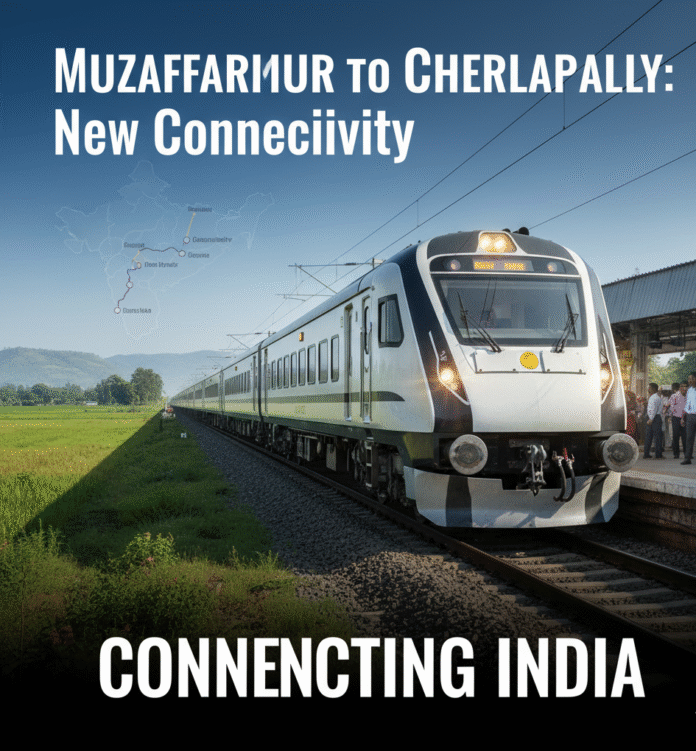
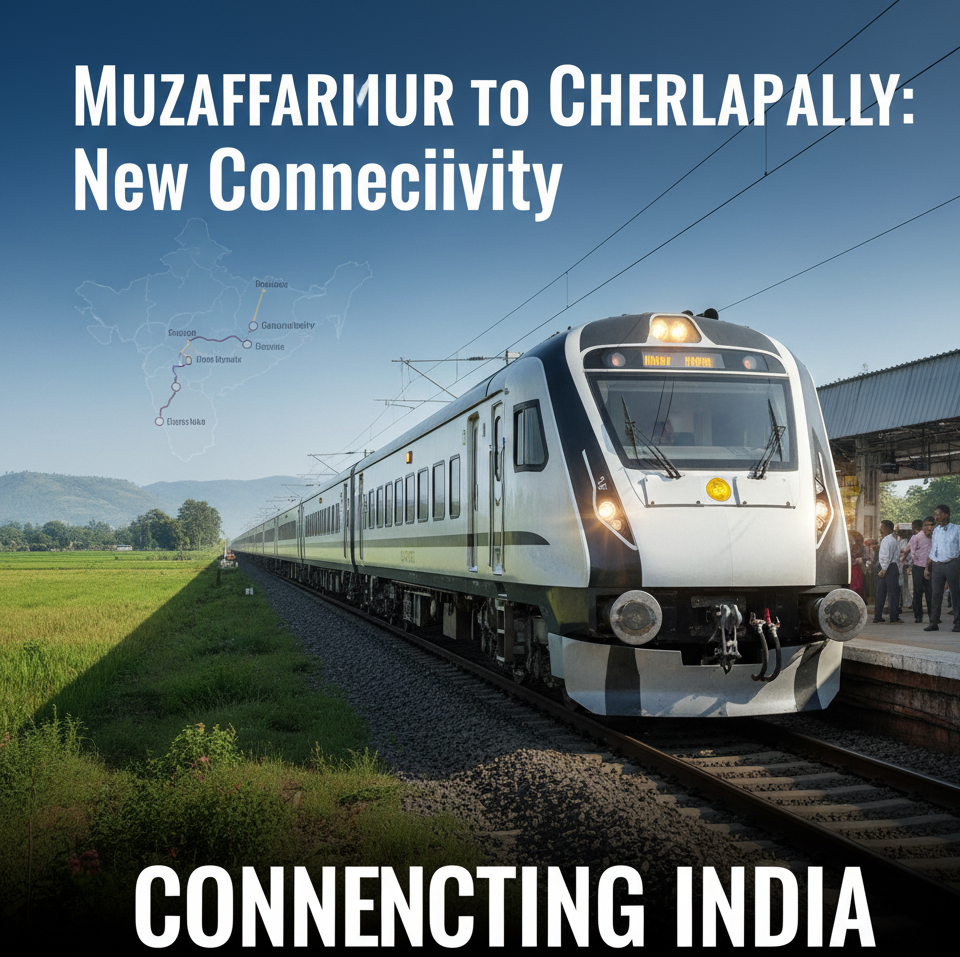
Connecting India: New Amrit Bharat Express Flags Off from Muzaffarpur to Cherlapally

New Amrit Bharat Express train traveling through a vibrant Indian landscape.
India's railway network expands with the inauguration of the new Amrit Bharat Express route.
New Amrit Bharat Express train traveling through a vibrant Indian landscape.
India’s railway network expands with the inauguration of the new Amrit Bharat Express route.

MUZAFFARPUR, BIHAR. A new chapter in India’s railway infrastructure is set to begin as the Amrit Bharat Express connecting Muzaffarpur (Bihar) to Cherlapally (Telangana) is flagged off on Saturday, September 28, 2025. This eagerly awaited non-AC train service is part of the Indian Railways’ plan to improve connectivity across the country. It will significantly reduce travel time and provide better amenities for passengers, strengthening north-south rail links.

The launch of this important route is expected to be a significant event, possibly attended by a high-ranking official from the Union Railway Ministry or even virtually by Prime Minister Narendra Modi. The event will take place at the Muzaffarpur Junction and marks a new era for commuters and travelers from Bihar heading to southern states.

The Amrit Bharat Express is designed for long-distance travel and offers many improved features. Unlike its premium counterparts like the Vande Bharat, the Amrit Bharat focuses on providing comfortable and affordable non-AC travel for everyone. It uses innovative Push-Pull technology for faster acceleration and deceleration, which leads to shorter journey times. The train has better seating, wider aisles, improved lighting, and dedicated spaces for luggage, making the experience more pleasant for passengers.

Bridging Distances: Impact on Connectivity and Regional Growth

This new service responds to a long-standing demand for direct and efficient rail links between the northern plains of Bihar and the southern regions. Muzaffarpur, a vibrant agricultural and commercial hub, will now have a direct connection to Cherlapally, an increasingly important railway station serving the eastern parts of Hyderabad, Telangana. This link is not just about shorter travel times; it’s about boosting economic activity and cultural exchange.

The Amrit Bharat Express is particularly expected to benefit:

Migrant Workers: Providing a direct and affordable link for the many migrant laborers from Bihar who travel to southern states for work. Pilgrims and Tourists making it easier to access religious and tourist sites along the route. Business Travelers Offering a convenient transportation option for traders and business owners, which will boost regional commerce.

Railway officials have confirmed that the train will stop at key junctions, maximizing utility for passengers along its route. This initiative fits well with the government’s vision of a ‘Viksit Bharat’ (Developed India) by connecting remote areas to the national economy. For more on India’s infrastructure development, visit thetlcnews.com.

A Testament to Modernizing Indian Railways

The launch of the Muzaffarpur-Cherlapally Amrit Bharat Express adds to Indian Railways’ modernization efforts. With high-speed corridors and upgraded facilities, the focus has shifted to improving efficiency, safety, and passenger experience. The Amrit Bharat series aims to serve a large segment of the population, blending speed and affordability, and bridging the gap between traditional trains and premium services.

This new train service is not just a transportation method; it symbolizes connectivity, progress, and the government’s commitment to making travel accessible and efficient for everyone. As the country prepares for the inauguration, the Muzaffarpur-Cherlapally route is set to become a vital link for many, strengthening connections between different regions of India. To keep up with the latest advancements in India’s public transportation sector, you can find more articles at thetlcnews.com/technology/.

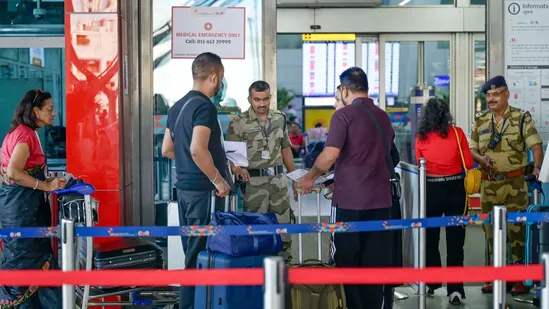
Delhi on Alert as Schools Receive Fresh Wave of Bomb Threats

Police cordon tape in front of a modern school building with a somber atmosphere.
Delhi Police have launched extensive search operations after a series of bomb threat emails were sent to schools across the city.

NEW DELHI, A wave of panic and anxiety spread through Delhi on Monday morning as several schools received bomb threat emails. This occurred just a day after two separate institutions faced similar scares. The latest threats, all sent through email, led to immediate evacuations, extensive search operations by law enforcement, and a city-wide security alert. While no suspicious devices were found in any of the targeted schools, the incidents raised serious concerns about a coordinated effort to disrupt daily life and instill fear.

The day’s events began when the Delhi Police received calls from several prominent schools reporting threatening emails. The method was the same as the threats received on Sunday, September 27, 2025, which forced the evacuation of two private schools in the city. The new threats revealed on Monday have led police to suspect this is part of a systematic campaign.

“We are taking all threats very seriously,” said a senior official from the Delhi Police, who chose to remain anonymous. “Bomb disposal squads, sniffer dogs, and the anti-terror unit have been deployed. We are working to find the origin of these emails and are coordinating with schools to ensure the safety of students and staff.”

These incidents sparked a trending conversation on social media, with parents and educators sharing their frustration and fear. Many used platforms to post real-time updates and seek reassurances. This situation is now being compared to earlier threats that have targeted public places in other major cities, highlighting a troubling trend.

The City Responds: A Test of Preparedness

In response to the threats, Delhi’s Lieutenant Governor, the Chief Minister, and the Police Commissioner held an emergency meeting to discuss the security situation. School authorities received praise for their quick and effective actions, following established safety protocols to evacuate buildings and inform parents. Many parents got messages from their children’s schools advising them to pick up their kids as a precaution.

The Delhi Police Cyber Cell is collaborating with intelligence agencies to identify the source of the threatening emails. The use of a VPN (Virtual Private Network) and advanced encryption techniques has complicated the tracing process, but officials remain confident they will find a breakthrough. The investigation is examining potential connections to cybercriminals or foreign entities that may seek to destabilize the region. This case emphasizes the growing importance of cybersecurity today, not just for financial institutions, but also for public safety.

The repeated nature of the threats has left many curious about the motives of the perpetrators. While no one has taken responsibility, the psychological impact on the public, especially students and parents, is considerable. This incident serves as a stark reminder of the evolving security challenges modern societies face. Authorities urge the public to remain calm, rely on official information sources, and report any suspicious activity promptly. For more updates on this developing story and other news in the country, visit https://thetlcnews.com/

India’s Reserves Remain Strong Amid Global Market Dynamics

Financial charts showing a slight dip in foreign exchange reserves, overlaid on a world map.
India's forex reserves see a minor dip, yet remain strong above the $700 billion mark.
Financial charts showing a slight dip in foreign exchange reserves, overlaid on a world map.
India’s forex reserves see a minor dip, yet remain strong above the $700 billion mark.

Forex Fluctuation: India’s Reserves Remain Strong Amid Global Market Dynamics

NEW DELHI – In a week marked by ongoing global economic currents, India’s foreign exchange reserves saw a slight dip, declining by a marginal $396 million to stand at $702.57 billion for the week ending September 19, according to the latest data from the Reserve Bank of India (RBI). This minor fluctuation, however, is a testament to the RBI’s proactive strategy of managing rupee volatility rather than a sign of a weakening financial position.

The Indian central bank’s latest statistical release shows that the overall forex kitty, while seeing a reduction, remains firmly in a position of strength, a key indicator of the country’s economic resilience. This minor dip follows a robust surge of nearly $4.7 billion in the previous week, a pattern of ebb and flow that is common in global currency markets. The data comes at a time when India is increasingly being recognized as a major player in the global economy, with its financial policies under close scrutiny.

The primary driver of this week’s decline was a fall in Foreign Currency Assets (FCAs), the largest component of the reserves, which decreased by $864 million to $586.15 billion. FCAs are held in a variety of non-US currencies, and their dollar value can be affected by the appreciation or depreciation of these currencies, such as the euro or the pound, against the US dollar. This means that a portion of the decline is simply a matter of valuation changes.

While the FCAs fell, there were positive movements in other components. The country’s gold reserves saw a significant increase of $360 million, reaching $92.78 billion. Similarly, Special Drawing Rights (SDRs) and India’s reserve position with the IMF also showed modest gains. This balanced movement across different assets highlights the diversified and well-managed nature of India’s foreign exchange holdings.

RBI’s Role in Maintaining Stability

Financial experts and market analysts point out that such fluctuations are a normal part of the RBI’s intervention strategy. The central bank regularly steps in to buy or sell US dollars to prevent excessive volatility in the Indian rupee. In July, for instance, the RBI did not purchase any US dollars for the first time in over a decade, choosing to sell a net of $2.54 billion to stabilize the rupee amid pressures from global geopolitical tensions and trade factors. These strategic moves are aimed at ensuring orderly market conditions rather than targeting a specific exchange rate. The robust level of reserves gives the RBI ample ammunition to defend the rupee when needed, providing confidence to foreign investors and rating agencies.

This recent data underscores the importance of a strong forex reserve position, which acts as a crucial buffer against external shocks and a key factor in attracting foreign direct investment (FDI). India’s reserves have been on a significant upward trajectory, hitting a record high of $704.885 billion in late September 2024. This growth story is a key reason why India is currently trending as a preferred destination for global capital.

The central government and financial institutions, including the RBI, are committed to strengthening the economy and fostering a stable financial environment. This includes measures to promote digital inclusivity and expand network connectivity, such as the launch of the indigenous BSNL 4G stack, as highlighted in a recent report by The TLC News. For more on India’s economic journey, visit thetlcnews.com/india-news/.

A Strong Foundation for a ‘Viksit Bharat’

The latest forex data, while showing a minor decline, reinforces a larger narrative of a nation building a robust, self-reliant financial system. The continuous accumulation of reserves over the years has placed India in an elite league of nations, and its well-managed approach to currency volatility is a key reason for its ranking among the world’s most promising emerging economies. The reserves provide a strong foundation for India’s long-term vision of becoming a ‘Viksit Bharat’ (Developed India) by 2047. To stay updated on the latest technological and economic developments shaping this vision, explore the latest trends in technology at thetlcnews.com/technology/.

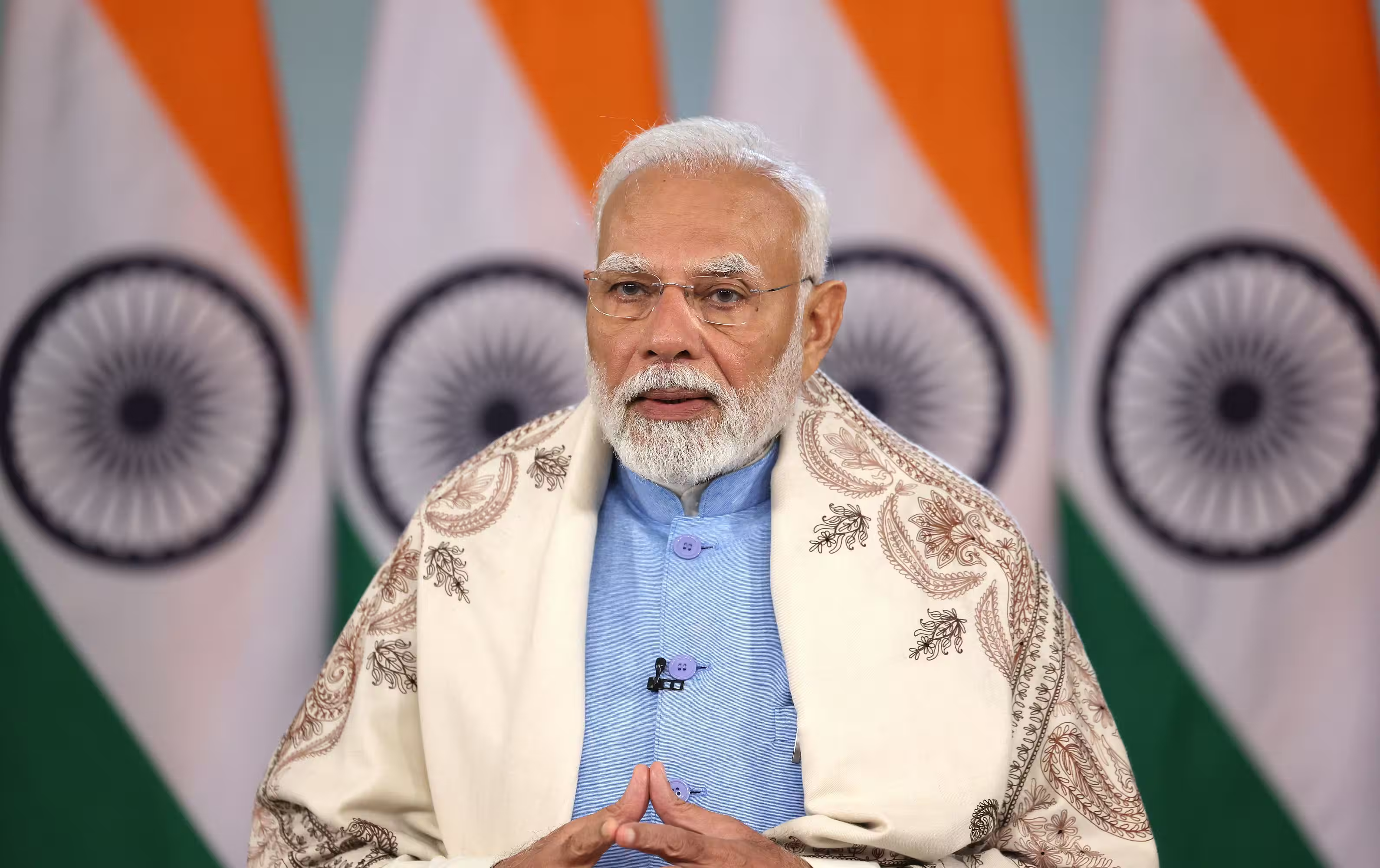
India Achieves Digital Sovereignty: PM Modi Unveils BSNL’s Indigenous 4G Stack

Prime Minister Narendra Modi speaking at the launch of BSNL's indigenous 4G network.
he 'Made in India' telecom stack becomes a reality, with the rollout of new BSNL 4G towers across the country.
Prime Minister Narendra Modi speaking at the launch of BSNL's indigenous 4G network.
he ‘Made in India’ telecom stack becomes a reality, with the rollout of new BSNL 4G towers across the country.

NEW DELHI – In a landmark move for India’s technological self-reliance, Prime Minister Narendra Modi today, September 27, 2025, unveiled Bharat Sanchar Nigam Limited’s (BSNL) indigenously developed 4G telecom stack. The historic event, which took place in Jharsuguda, Odisha, marks a pivotal moment, positioning India among a select group of nations capable of designing, developing, and manufacturing its own telecom equipment.

This significant step forward is a direct outcome of the government’s ambitious ‘Aatmanirbhar Bharat’ (Self-Reliant India) initiative. For years, India, despite being one of the world’s largest and most dynamic telecom markets, has remained heavily reliant on foreign technology for its network infrastructure. Today’s launch, however, shatters that dependency, securing India’s digital sovereignty and ensuring the country’s critical digital backbone is built on homegrown innovation.

This significant step forward is a direct outcome of the government’s ambitious ‘Aatmanirbhar Bharat’ (Self-Reliant India) initiative. For years, India, despite being one of the world’s largest and most dynamic telecom markets, has remained heavily reliant on foreign technology for its network infrastructure. Today’s launch, however, shatters that dependency, securing India’s digital sovereignty and ensuring the country’s critical digital backbone is built on homegrown innovation.

The fully cloud-based, future-ready telecom stack is a collaborative triumph of Indian engineering. The consortium behind this project includes the Centre for Development of Telematics (C-DoT) for the core network, Tejas Networks for the Radio Access Network (RAN), and Tata Consultancy Services (TCS) for system integration. Together, they have delivered a robust, scalable, and secure network solution that is not only 4G-enabled but also seamlessly upgradable to 5G. This is a testament to the vision laid out by PM Modi in 2020, which challenged Indian companies to innovate rather than rely on foreign tenders.

Speaking at the event, Telecom Minister Jyotiraditya Scindia hailed the occasion as a historic day for India. He noted that the country has now entered the elite league of nations like Denmark, Sweden, South Korea, and China that possess end-to-end telecom manufacturing capabilities. The Minister emphasized the profound impact of this development on national security, economic resilience, and job creation, highlighting that this is a bold statement of India’s capability on the global stage.

Connecting the Unconnected: BSNL’s Vision for a Digitally Inclusive India

The rollout will see BSNL’s new network deployed across nearly 98,000 sites nationwide, with a special focus on connecting remote and underserved areas. This is a crucial component of the Digital Bharat Nidhi project, which aims to achieve 100% 4G network saturation, bringing high-speed connectivity to approximately 30,000 villages that previously had no mobile service. The move is expected to bridge the digital divide, empowering millions of citizens with access to e-governance, online education, digital banking, and market information, thereby transforming lives and fostering inclusive growth. For more insights on digital inclusivity, visit thetlcnews.com/technology/.

A Future of Indigenous Innovation and Global Leadership

For the common citizen, this indigenous stack means more than just a faster network. It promises enhanced network security, greater control over data, and a more resilient and reliable digital infrastructure. It is a powerful symbol of a New India—one that is not just a consumer of technology, but a global leader in its design and development. With the successful launch of its own telecom stack, India has solidified its position as a major player in the global technology landscape, paving the way for future innovations and reinforcing the nation’s journey towards becoming a truly Viksit Bharat. For ongoing updates on India’s strategic initiatives, explore thetlcnews.com/india-news/.

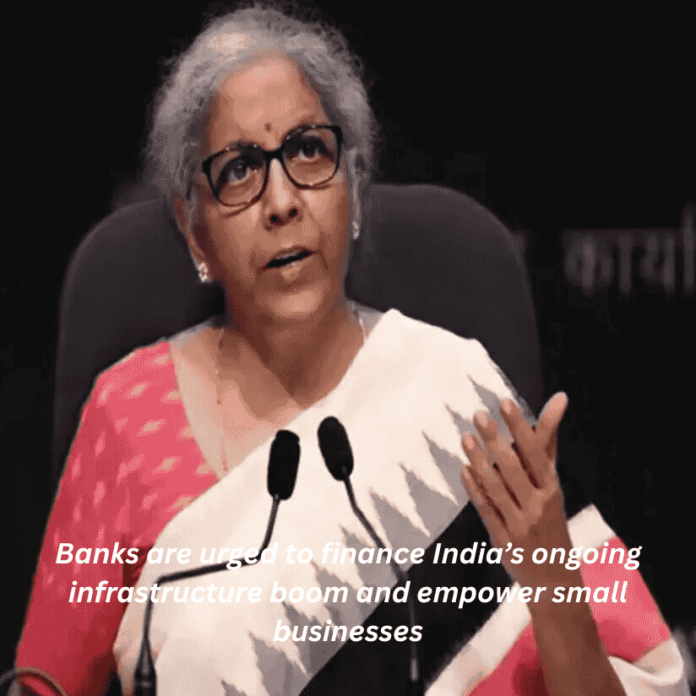
Fueling Growth: FM Sitharaman Calls on Banks to Step Up Lending to Infra and MSMEs

Banks are urged to finance India’s ongoing infrastructure boom and empower small businesses
Finance Minister Sitharaman's call for increased lending to MSMEs and infrastructure reflects the government's focus on economic growth.
Banks are urged to finance India’s ongoing infrastructure boom and empower small businesses
Finance Minister Sitharaman’s call for increased lending to MSMEs and infrastructure reflects the government’s focus on economic growth.

At a key address in Pune, the Finance Minister urged India’s banking sector to become a proactive engine of growth amidst global uncertainty, emphasizing strong balance sheets, professional governance, and customer first policies

PUNE, On Thursday, September 25, 2025, Union Finance Minister Nirmala Sitharaman delivered an important speech that laid out the direction for India’s financial sector. Speaking at the 91st Foundation Day of the Bank of Maharashtra in Pune, she urged banks to strengthen their role as drivers of economic growth. She called on financial institutions with strong balance sheets to substantially increase lending to crucial sectors, including public infrastructure, industries, and Micro, Small, and Medium Enterprises (MSMEs).

Sitharaman’s comments come during a time of global uncertainty, where geopolitical tensions and unstable markets are affecting economies worldwide. She pointed out India’s economic stability, noting the strong macroeconomic fundamentals, a young population, and a high reliance on domestic demand. She mentioned that India’s GDP grew by 7.8% in the April-June quarter, showing the country’s ability to handle external challenges.

The global environment has become increasingly unpredictable,” Sitharaman said. “In this situation, the role of banks is even more crucial. They are not just guardians of savings but are also essential for building national infrastructure and supporting MSMEs.”

The Mandate for Increased Lending

The focus of her message was a clear directive for banks to look beyond traditional retail lending and actively finance projects that are important for the country.

Public Infrastructure: Sitharaman emphasized the need for significant investments in public infrastructure projects, which she described as the foundation of India’s long-term growth. Banks are expected to provide the necessary capital for these large projects.

MSMEs and Innovation: Highlighting the MSME sector as a “second engine of development,” the Finance Minister urged a greater flow of credit to these businesses. She also stressed the importance of lending for innovation and the adoption of technology within these small and medium-sized enterprises. This aligns with the government’s larger goal of a digital-first, self-reliant India. For more on how this sector is changing, read our analysis in the India News section.

The Pillars of a Strong Banking Sector

In addition to lending, Sitharaman’s speech addressed two other key areas for India’s banking system: governance and customer focus.

Professional Governance: The Finance Minister praised the recovery of public sector banks, which shifted from a period of high non-performing assets (NPAs) to achieving a record combined net profit of ₹1.78 lakh crore in the fiscal year ending March 2025. She credited this success to professional management and a move away from the legacy of poor governance associated with “phone banking.”

Customer Centric Approach: Sitharaman emphasized that customer trust is vital in banking. “Every complaint should be viewed as an opportunity to improve, innovate, and build trust,” she stated. She called for a system where addressing complaints is paired with an analysis of root causes to prevent them from happening again. This focus on customer experience is especially crucial for gaining and keeping the trust of India’s large youth population. For further insights on how technology is transforming customer service, see our insights in the Technology section.

The Finance Minister’s address, attended by Financial Services Secretary M. Nagaraju, clearly calls for India’s banking sector to take on a role beyond being financial intermediaries. They are now expected to become strategic partners in the country’s journey toward economic resilience and sustained growth, especially amid an unpredictable global economy.

A New Chapter for Students: CBSE Releases 2026 Board Exam Dates as India Adds 10,000 New Medical Seats

A student’s hand marking dates on a CBSE exam schedule, symbolizing academic planning.
The release of the 2026 exam schedule and the announcement of new medical seats mark a week of major announcements for students across India.

NEW DELHI. In a significant week for India’s student community, two major announcements have set the stage for the academic year ahead. The Central Board of Secondary Education (CBSE) has officially released the detailed date sheet for the 2026 board exams. This brings much-needed clarity to millions of students. At the same time, the government has approved the creation of over 10,000 new medical seats in government colleges. This move is expected to reshape medical education in the country

The CBSE board exams for 2026, for both Class 10 and Class 12, will start on February 15, 2026. This date has become standard for the board to provide a consistent and predictable schedule. The exams will end by the first week of April. This allows students to prepare for entrance tests and admissions to higher education. The release of the date sheet in advance is crucial for students. It helps them refine their revision strategies and manage their study plans more effectively.

Navigating the 2026 Exam Schedule

This year’s schedule is particularly important as it marks the first full-fledged board exams since implementing the new National Education Policy (NEP) guidelines on a larger scale. While the core syllabus remains the same, there is now more focus on competency-based questions. Students are advised to carefully review the sample papers released by CBSE to understand the new pattern. You can find detailed breakdowns of the exam format and preparation strategies on our Education News page

For Class 12 students, the science and commerce streams will have their main papers scheduled over four weeks. There are ample gaps between key subjects like Physics, Chemistry, Mathematics, Accountancy, Economics, and Business Studies. This thoughtful scheduling aims to reduce student stress and give them enough time to prepare for each paper.

A Major Boost for Medical Aspirants

In a parallel development that has brought relief and excitement to medical aspirants, the government has announced the addition of more than 10,000 MBBS seats in various government medical colleges. This initiative is part of a broader effort to address the shortage of qualified doctors in India, especially in rural and semi-urban areas. The new seats will be distributed across colleges that are newly established or expanding their infrastructure

This move responds to the rising competition for a limited number of seats in medical schools. For years, thousands of talented students have been unable to secure a spot even after passing the NEET (National Eligibility cum Entrance Test). The addition of new seats will significantly improve the student-to-seat ratio and create more opportunities for students from diverse backgrounds. To understand the impact of this policy on the healthcare sector, you can read our analysis in the India News section.

I Love Muhammad” Row: Why a Slogan Sparked Nationwide Protests and a Debate on Faith and Law

A protestor's sign reading "I Love Muhammad" contrasted with a tense police presence.
The “I Love Muhammad” controversy has sparked a national conversation about the right to religious expression

NEW DELHI – A seemingly simple expression of faith, “I Love Muhammad,” has unexpectedly become the focal point of a major controversy, triggering protests, clashes, and a fierce national debate across India. What began as a localized police action in Kanpur, Uttar Pradesh, on September 9, 2025, has since evolved into a widespread movement, highlighting the fragile nature of religious sentiment in the country.

The row’s origin can be traced back to a Barawafat (Eid-e-Milad-un-Nabi) procession held in Kanpur’s Rawatpur area. During the parade, a group of participants displayed a banner with the slogan “I Love Muhammad.” While for many, this was a heartfelt expression of love for Prophet Muhammad, local Hindu groups objected, claiming it was an unauthorized “new tradition” being introduced to a customary procession route. Police quickly intervened, leading to a heated dispute.

On September 9, the Kanpur police registered a First Information Report (FIR) against 24 individuals, including nine named and 15 unnamed, on charges of disturbing communal harmony. Police officials, including DCP Dinesh Tripathi, have clarified that the FIR was not for the slogan itself but for allegedly introducing a new practice by placing the banner in a non-traditional location and for reported instances of tearing down posters belonging to another community.

However, this official explanation has failed to quell the outrage. For a significant portion of the Muslim community, the police action is perceived as an attempt to criminalize a core tenet of their faith, the expression of devotion to the Prophet. This perception has fueled a wave of solidarity protests across the country.

From Local Dispute to a National Movement

The controversy gained traction after All India Majlis-e-Ittehadul Muslimeen (AIMIM) chief Asaduddin Owaisi spoke out on September 15. In a widely shared tweet, he challenged the police action, stating, “I LOVE MOHAMMAD. This is not a crime. And if it is, then I am ready to accept every punishment for it.” His words transformed the slogan into a symbol of defiance and a rallying cry for the protection of religious and constitutional rights.

After Owaisi’s tweet, the movement spread beyond Uttar Pradesh. Protests, both peaceful and violent, have been reported in states like Uttarakhand (Kashipur), Maharashtra (Nagpur, Mumbra), and Gujarat (Godhra.

Unnao & Bareilly: In Unnao, processions with “I Love Muhammad” banners led to clashes and stone-pelting with police, resulting in multiple FIRs. In Bareilly, local clerics supported the campaign and encouraged displaying the slogan on doors and walls, describing it as a statement of faith and peace.

Gujarat: The situation escalated in Gujarat, where reports surfaced of police allegedly parading and beating Muslim youths for sharing posts with the slogan on social media. These actions led to increased protests and legal notices from minority groups.

These incidents highlight a growing belief that expressing love for the Prophet should not result in legal action, especially when it is seen as part of one’s religious identity. Protesters argue that the right to express one’s faith peacefully is a fundamental freedom protected by the Constitution. For a detailed look into the legal aspects of such religious expressions, you can read more in our India News section.

The Digital Campaign and Community Response. The “I Love Muhammad” controversy has also turned into a significant digital movement. Social media is filled with posts, hashtags, and profile picture changes showing support. This online campaign has helped organize protests and spread the message far beyond the sites of demonstrations.

Religious scholars and community leaders have joined the discussion, defending the campaign as a natural and peaceful expression of faith. They have urged authorities to withdraw the FIRs, labeling them legally unsustainable and socially divisive.

The government and police maintain that their actions are only to keep law and order and prevent new traditions that could threaten communal harmony. They have warned against spreading misinformation and assured that they are taking action only against those who break the law. However, the conflicting narratives have created a trust gap, leaving many questioning where the line between religious expression and public order truly lies. For more on the role of social media in such events.

Abhishek’s Blistering 74 Powers India to Dominant Win Over Pakistan in Asia Cup Super Four

A close-up, color-graded image of Indian captain Suryakumar Yadav and Pakistan pacer Haris Rauf looking at each other intensely on the field, with a faded overlay of the text "RIVALRY NO MORE.
The face of the rivalry: Tensions flare between Suryakumar Yadav and Haris Rauf as India asserts its dominance

DUBAI: In a crucial Super Four match at the Asia Cup, India put on a strong performance to beat arch-rivals Pakistan by six wickets. This victory, secured with an impressive chase, not only highlighted India’s strength but also added to the off-field tensions surrounding the fierce rivalry.

Abhishek Sharma led the charge with a remarkable 74 runs off just 39 balls. He made it easy for India to chase down Pakistan’s competitive target of 172. Sharma’s innings, along with 47 from Shubman Gill, got the team off to an explosive start. Together, they formed a 105-run opening partnership within 9 overs, showcasing the aggressive T20 style of the Indian team.

Even with a brief struggle in the middle order, India completed the chase with seven balls remaining. Tilak Varma and Hardik Pandya ensured a smooth finish. Earlier, Indian bowlers, especially Shivam Dube, played a key role by taking important wickets during the middle overs, slowing down Pakistan’s scoring

The Evolving Rivalry and Off-Field Tensions

The tension was just as high off the field as it was during the match. There was no post-match handshake between the two teams, highlighting the ongoing political and sports issues. This has become common in recent matches, showing the strained relations.

The match also featured Pakistan pacer Haris Rauf, who caused a stir on social media with a controversial “6-0” gesture aimed at Indian fans. This gesture, thought to reference unverified claims from a past military conflict, received considerable backlash online, showing how the rivalry often crosses into geopolitical matters.

After the match, Indian captain Suryakumar Yadav stated clearly that the long-standing contest “can no longer be considered serious rivals” because of India’s consistent winning record. His comments indicate growing confidence within the Indian team and a belief that the gap between the two teams is widening.

India Innings Scorecard

BatsmanDismissalRuns (Balls)4s6s
Abhishek Sharmac Rauf b Abrar Ahmed74 (39)65
Shubman Gillb Faheem Ashraf47 (28)80
Suryakumar Yadav (c)c Abrar Ahmed b Rauf0 (3)00
Tilak Varmanot out30 (19)22
Sanju Samsonb Haris Rauf13 (17)10
Hardik Pandyanot out7 (7)10
Extras(w 3, lb 0, nb 0)3

Fall of Wickets: 1-105 (Gill), 2-106 (Suryakumar), 3-123 (Abhishek), 4-148 (Samson)

Pakistan Innings Scorecard

BatsmanDismissalRuns (Balls)4s6s
Fakhar Zamanc & b Hardik Pandya21 (17)30
Sahibzada Farhanc & b Shivam Dube58 (45)53
Saim Ayubc Abhishek b Shivam Dube21 (17)30
Hussain Talatc & b Kuldeep Yadav1 (4)00
Mohammad Nawazc Varma b Hardik Pandya21 (19)11
Salman Agha (c)not out17 (13)01
Faheem Ashrafnot out20 (8)12
Extras(w 10, lb 2, b 1)13
Total(5 wickets, 20 overs)171

Fall of Wickets: 1-21 (Zaman), 2-93 (Ayub), 3-110 (Talat), 4-115 (Farhan), 5-149 (Nawaz)

For more news and analysis on this match and other sports, visit thetlcnews.com/sports.


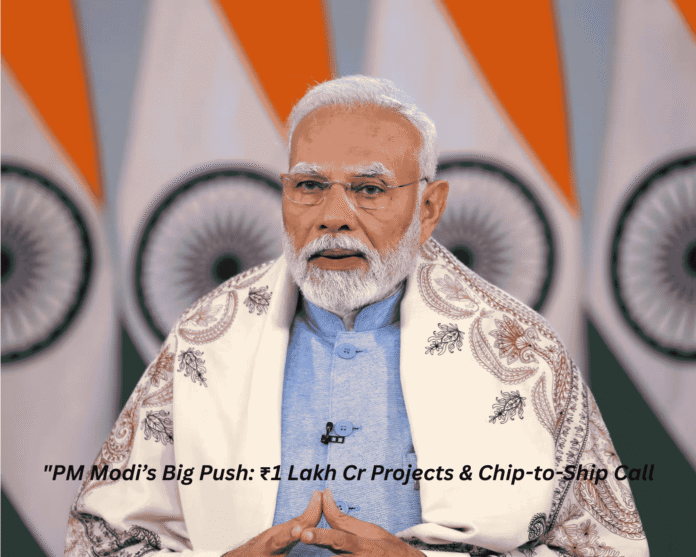
PM Modi Urges ‘Chip-to-Ship’ Self-Reliance at Bhavnagar, Inaugurates Projects Worth ₹1 Lakh Crore

PM Modi addresses Bhavnagar crowd, launches ₹1 lakh crore projects
PM Modi launches ₹1 lakh crore projects in Bhavnagar, urges India to go 'chip-to-ship' self-reliant

Prime Minister Narendra Modi today, September 19, 2025, spoke to a large crowd in Bhavnagar, Gujarat. He stressed the need for India to become fully self-reliant in every sector, from “chip to ship.” Modi highlighted that India should focus on creating an environment where all products, from semiconductor chips to large shipping infrastructure, are developed domestically.

Major Development Projects Inaugurated

During the event, PM Modi opened and laid the foundation stones for development projects worth over ₹1 lakh crore. These projects are expected to improve infrastructure, create jobs, and strengthen India’s Make in India initiative.

They include

– Expansion of port facilities to boost India’s maritime trade capacity

-New semiconductor manufacturing units under the India Semiconductor Mission

– Housing and urban development projects designed to enhance citizens’ quality of life

A Push for Atmanirbhar Bharat

PM Modi’s speech reiterated his government’s commitment to the Atmanirbhar Bharat Abhiyan. He stated that India’s future depends on strengthening domestic production, lowering import needs, and becoming a global manufacturing hub. He encouraged entrepreneurs, startups, and international investors to engage in India’s growth

India should not only be a consumer but also a creator of technology and infrastructure. From chip fabrication plants to shipbuilding yards, the time has come to invest in every part of the value chain,” Modi said

Impact on Economy and Industry

Experts believe these initiatives could greatly change India’s economy. The push for semiconductors could lessen reliance on imports from East Asia, while port development projects are expected to increase India’s cargo handling capacity by 30% over the next five years.

Industry leaders welcomed the announcements, calling them a significant turning point for the country’s logistics and technology sectors. Analysts estimate that the projects could create over 5 lakh direct and indirect jobs in the next three years.

Related News

For more updates related to India, visit The TLC News India. You can also check our Latest News Section for more insights into India’s semiconductor mission.