

back to top
Sponsered
Home Blog Page 7

Tiger Shroff’s Baaghi 4 Signals a Massive Box Office Comeback with Record Breaking Advance Bookings

A dramatic cinematic shot of Tiger Shroff in a high-octane action pose, with explosions and a darker, grittier atmosphere in the background.
Tiger Shroff's Baaghi 4 is on fire! 🔥 The film's advance bookings are breaking records and signaling a major comeback for the action star. Find out why it's generating so much buzz."

Bollywood is abuzz with the spectacular advance booking numbers for Tiger Shroff’s highly anticipated film, Baaghi 4. The film, which has a September 5th release, is proving to be a game-changer for the actor, with its pre-release ticket sales far outperforming his previous films like Bade Miyan Chote Miyan and Ganapath. This impressive performance is being hailed as a potential major comeback for the action star.

The film has already grossed an estimated ₹5 crore from its Day 1 advance bookings alone, showcasing a decisive lead over its competitor, The Bengal Files. Analysts are attributing this success to a combination of strong franchise loyalty and a clever promotional strategy, which includes a 50% discount on tickets to maximize footfall on opening day.

Directed by A. Harsha, the latest installment of the Baaghi franchise features former Miss Universe Harnaaz Sandhu as the female lead and Bollywood veteran Sanjay Dutt in a menacing role. The trailer, full of high-octane stunts and a darker, grittier tone, has resonated strongly with audiences, setting the stage for what many predict will be a blockbuster opening.

This success is particularly significant for Tiger Shroff, who is looking to bounce back after a series of films that underperformed at the box office. The overwhelming response to Baaghi 4 not only cements the franchise’s popularity but also reaffirms Shroff’s position as a leading action hero in the industry.

Why Baaghi 4 is Generating Unprecedented Buzz

Franchise Power: The Baaghi series has consistently delivered adrenaline-pumping action and stylish fight sequences, building a loyal audience base since the first film in 2016.

Star Power Trio: Alongside Tiger Shroff, the film stars Harnaaz Sandhu, making her Bollywood debut, and Sanjay Dutt as a powerful antagonist. This mix of fresh glamour and seasoned villainy adds to the film’s appeal.

Aggressive Promotions: The producers have launched a 50% ticket discount strategy for opening day, ensuring packed theatres and word-of-mouth momentum.

Trailer Reception: With its darker tone, breathtaking stunts, and slick cinematography, the trailer has already crossed massive viewership milestones on YouTube and social media, cementing hype.
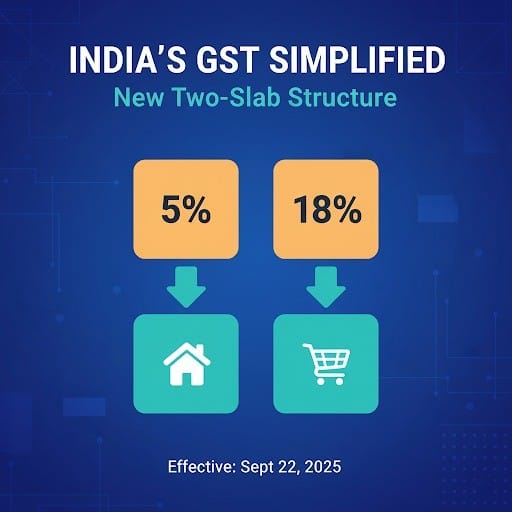
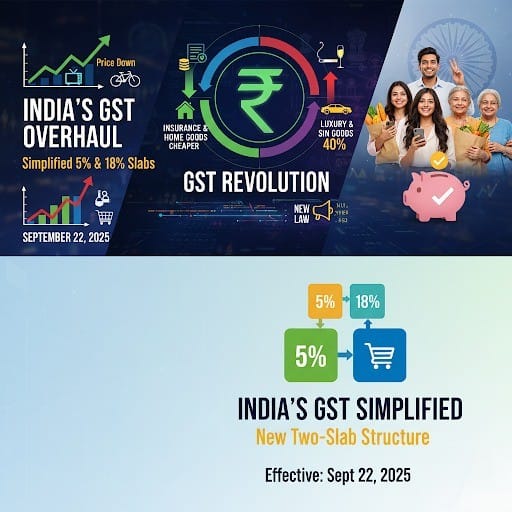
India Embraces GST 2.0: Simplified Slabs Promise Economic Boost & Consumer Relief

Graphic: India's GST Simplified. New Two-Slab Structure showing 5% and 18% rates leading to home and shopping cart icons
A landmark decision by the GST Council to simplify tax slabs to 5% and 18% is set to boost India's economy and ease consumer burdens. Learn how this reform impacts daily essentials, insurance, and more.

India’s Bold New GST Structure: Simplified Slabs Set to Reshape Economy and Consumer Spending

New Delhi– In a groundbreaking move poised to redefine India’s economic landscape, the Goods and Services Tax (GST) Council has officially approved a sweeping overhaul of the nation’s indirect tax system. Shifting from its existing multi-slab framework, India will now embrace a simplified two-slab structure featuring 5% and 18% GST rates, effective September 22, 2025. This landmark decision, widely dubbed “GST 2.0,” is anticipated to usher in a new era of affordability, streamlined compliance, and accelerated economic growth.

What Gets Cheaper? A Win for the Average Indian Household

The most significant immediate benefit of this reform is the expected reduction in prices across a vast array of goods. Consumers can look forward to more affordable daily essentials and durable items as numerous products shift to lower tax brackets.

  • Daily Necessities: Toiletries like hair oil, shampoo, and toothpaste, alongside household goods and kitchenware, are set to become more budget-friendly.
  • Mobility: Bicycles, small cars, and motorcycles under 350cc will now fall under the 18% slab, making personal transportation more accessible.
  • Consumer Durables: Big-ticket items such as air conditioners and televisions (above 32 inches), previously attracting a 28% GST, will now be taxed at 18%, offering significant savings.
  • Food Items: Indian breads, paneer, and UHT milk have been made entirely tax-free, providing relief on staple food items

Insurance Relief: A Major Boost for Financial Security

Perhaps one of the most impactful changes for individual citizens is the complete exemption of individual life and health insurance policies from GST. Previously taxed at 18%, this move will significantly reduce the cost of insurance premiums for products like family floater plans and term insurance. This initiative is expected to enhance financial security for millions and encourage greater penetration of insurance services across the country.

While many items become cheaper, certain “sin goods” and ultra-luxury products will face a new, higher 40% GST slab. This category includes cigarettes, premium liquor, and high-end automobiles. The implementation of these higher rates for tobacco and related products will follow once the government’s compensation cess liabilities are settled. This strategic move aims to offset revenue losses from other reductions and potentially discourage the consumption of these items.

Economic Impact: A Catalyst for Growth and Consumption

Economists and industry experts are largely optimistic about the long-term impact of this GST rationalization. While the immediate fiscal impact from tax reductions is estimated at ₹48,000 crore, government officials anticipate that this will be more than compensated by increased collections driven by:

  • Boosted Consumer Demand: Lower prices are expected to stimulate consumer spending, invigorating various sectors.
  • Simplified Compliance: A more straightforward tax structure is likely to ease the burden on businesses, particularly SMEs, fostering better compliance and reducing administrative costs.
  • Enhanced Investment: A clearer and more predictable tax regime could attract further domestic and foreign investment.

The simplification of India’s GST structure marks a pivotal moment, promising to create a more efficient, equitable, and growth-oriented economic environment for both businesses and everyday citizens.

GST 2.0 Simplified Tax Slabs (Effective September 22, 2025)

CategoryOld GST RateNew GST RateImpact / Benefit
Daily Necessities (toiletries, shampoo, toothpaste, kitchenware)12% / 18%5%Essentials become cheaper
Mobility (bicycles, small cars, motorcycles <350cc)28%18%More affordable personal transport
Consumer Durables (ACs, TVs above 32 inches)28%18%Big savings on home appliances
Food Items (Indian breads, paneer, UHT milk)5%0% (Exempted)Staple food items now tax-free
Insurance Policies (life & health insurance)18%0% (Exempted)Lower premiums, higher financial security
“Sin Goods” & Luxury Items (cigarettes, premium liquor, high-end cars)28% + Cess40%Higher taxes to offset losses & discourage use
Overall ComplianceMultiple slabs (5%, 12%, 18%, 28%)Simplified: 5% & 18%Easy compliance for businesses & SMEs

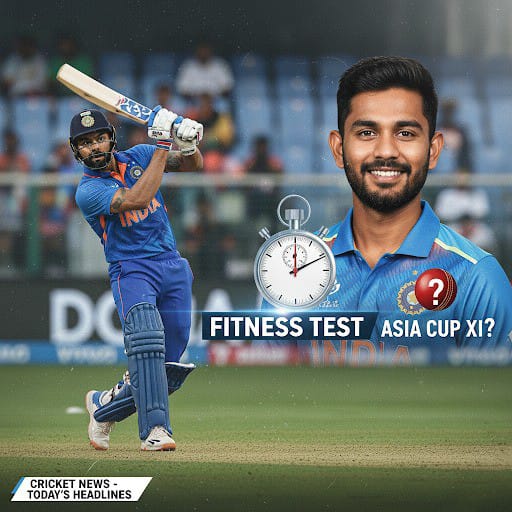
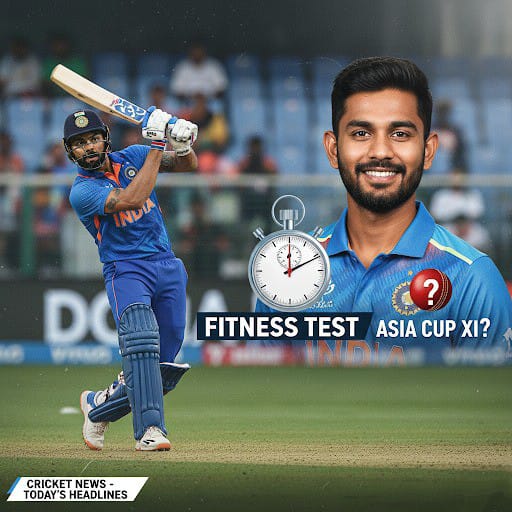
Kohli’s Fitness Test Sparks Exemption Debate; Sanju Samson’s Asia Cup Spot Under Scrutiny

A digital collage or split-screen image showing Indian cricketer Virat Kohli on one side and Sanju Samson on the other. Kohli is in a training environment, while Samson is shown batting in a match. The image represents the two major ongoing debates in Indian cricket.
While Virat Kohli's fitness test in London raises questions about player protocols, the debate over Sanju Samson's role in the Asia Cup squad intensifies

Indian Cricket Buzz: Kohli’s London Fitness Test & Samson’s Asia Cup Future in Focus

The world of Indian cricket is abuzz with two significant developments that have captured the attention of fans and pundits alike. Star batsman Virat Kohli recently underwent a fitness test in London, a move that has ignited a spirited debate about potential “exemptions” for senior players. Simultaneously, discussions are intensifying around Sanju Samson’s possible new role and inclusion in India’s Asia Cup playing XI.

Virat Kohli’s London Fitness Test Raises Eyebrows

Virat Kohli, one of India’s most prominent cricketers, reportedly undertook a fitness assessment in London. While the details of the test remain under wraps, its location and timing have prompted questions. Typically, such evaluations for Indian players are conducted at the National Cricket Academy (NCA) in Bengaluru. This deviation has led to speculation and discussion within cricketing circles about whether established players receive different protocols or if there’s a specific reason for Kohli’s overseas test. Fans are keenly awaiting official clarification, as the fitness of key players is paramount, especially with major tournaments on the horizon.

Sanju Samson’s Asia Cup XI: A Hotly Debated Spot

Adding to the excitement, the debate surrounding Sanju Samson’s potential new spot in India’s Asia Cup XI is heating up. Samson, known for his elegant stroke play and wicket-keeping abilities, has often found himself on the fringes of the national team. With the Asia Cup fast approaching, team selectors are reportedly deliberating on various combinations, and Samson’s name has emerged as a strong contender for a crucial role. Pundits are discussing where he might fit best in the batting order and whether his inclusion could provide the much-needed stability or firepower to India’s middle order. His performance in recent domestic and international outings will undoubtedly play a key role in the final decision.

As the Asia Cup draws closer, these two stories underscore the dynamic nature of Indian cricket, where every player’s form, fitness, and position are subjects of intense scrutiny and national interest.

Floods and Rains Wreak Havoc Across North India: A Detailed Report on the Crisis in Punjab, Delhi, and More

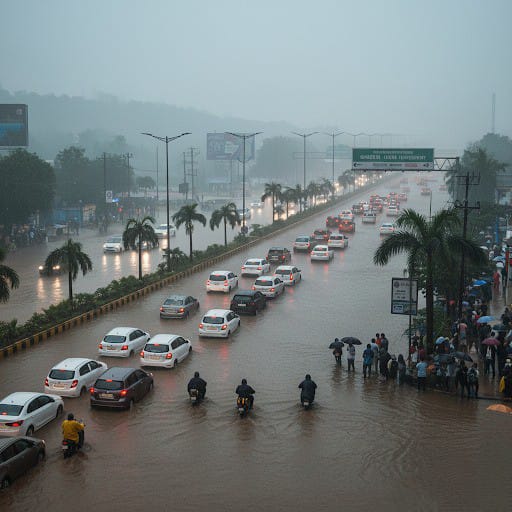
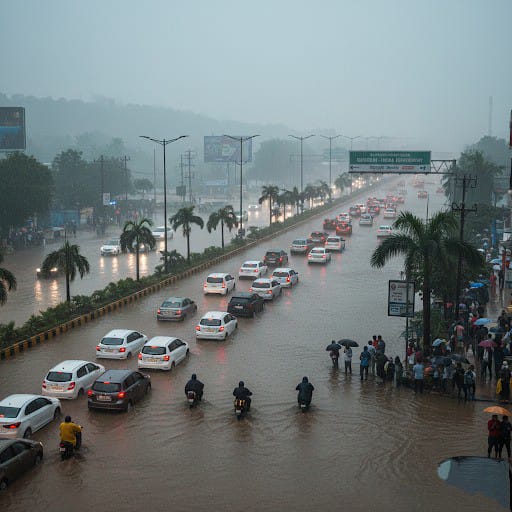
A high-angle shot of a waterlogged urban street in North India, with cars and motorbikes stuck in heavy traffic during a torrential rainstorm. People with umbrellas are seen on the sidewalks, and the sky is overcast and grey.
Traffic chaos and severe waterlogging brought daily life to a standstill in Delhi and its surrounding areas, as record-breaking monsoon rains lashed the region.

Heavy Monsoon Unleashes Chaos Across Northern States

A relentless monsoon has brought large swathes of North India to a standstill, with Punjab declaring all its districts flood-affected, impacting an estimated 3.5 lakh people. The torrential downpour has triggered widespread waterlogging, traffic snarls, and emergency measures across Jammu and Kashmir, Himachal Pradesh, and the National Capital Region (NCR).

Punjab Faces unprecedented Deluge

The situation in Punjab remains critical, as continuous heavy rainfall has led to overflowing rivers and canals, submerging vast agricultural lands and residential areas. The state government’s declaration of all districts as flood-affected underscores the severity of the crisis, prompting relief operations and evacuations in the hardest-hit regions. Authorities are working tirelessly to provide aid and manage the escalating water levels.

NCR Gridlock: Delhi, Noida, Gurugram Struggle with Waterlogging

Further south, the NCR has not been spared from the monsoon’s fury. Delhi, Noida, and Gurugram woke up to widespread waterlogging and traffic chaos, transforming routine commutes into arduous journeys. Major roads became inundated, causing significant disruptions to daily life. In response to the hazardous conditions, many schools in these regions have announced closures, prioritizing the safety of students and staff. Residents are advised to avoid unnecessary travel and exercise extreme caution

Himachal Pradesh and J&K on High Alert

Meanwhile, Jammu and Kashmir and Himachal Pradesh are bracing for continued heavy rainfall, with meteorological departments issuing severe warnings. The mountainous terrains in these states are particularly vulnerable to landslides and flash floods, posing significant risks to communities and infrastructure. Local administrations are urging residents and tourists to remain vigilant and adhere to safety advisories.

As the region grapples with the monsoon’s impact, emergency services are on high alert, working to mitigate the damage and ensure public safety. The coming days will be crucial as authorities monitor water levels and weather patterns, hoping for a respite from the relentless downpour.

COVID 19 Latest: JN.1 Variant Dominates, Updated Vaccines Rolled Out as India Reports Low Cases

A glowing blue 3D render of the JN.1 coronavirus variant with two syringes on a futuristic circuit board, set against a blurred world map showing data points.

COVID-19 Latest: JN.1 Variant Dominates, Updated Vaccines Rolled Out as India Reports Low Cases

New Delhi, India – As the world continues to navigate the evolving landscape of COVID-19, the latest data indicates a significant shift in dominant variants and vaccine strategies. While India reports a remarkably low active case count, global health organizations are rolling out updated vaccines to combat newer strains, primarily the JN.1 variant, which has shown widespread prevalence.

As of September 1, 2025, India’s active COVID-19 caseload remains minimal, with only 83 active cases reported nationwide. This figure reflects the success of widespread vaccination campaigns and natural immunity over the past few years. However, public health experts emphasize the continued need for vigilance, especially with new variants emerging globally.

Global Variant Landscape: JN.1 Leads the Charge

The World Health Organization (WHO) continues to closely monitor SARS-CoV-2 variants, with JN.1 now classified as a Variant of Interest (VOI) due to its rapid spread and immune-evasive properties. Several other variants, including KP.3, LP.8.1, and NB.1.8.1, are also under active surveillance as Variants Under Monitoring (VUMs). The constant evolution of the virus underscores the dynamic nature of the pandemic, even as its severity has largely decreased.

Updated Vaccines for the 2025-2026 Season

In a proactive move, the U.S. Food and Drug Administration (FDA) has granted approval for updated COVID-19 vaccines for the upcoming 2025–2026 season. These new formulations from Pfizer-BioNTech, Moderna, and Novavax are specifically designed to target recent virus strains, including the prevalent LP.8.1 sublineage of the JN.1 variant. This marks a strategic shift to ensure vaccines remain effective against circulating strains.

Significantly, the eligibility criteria for these new vaccines have been refined. The primary recommendation is now for adults aged 65 and older, and individuals aged 5 to 64 with at least one high-risk health condition. This targeted approach aims to protect the most vulnerable populations while moving away from broad annual vaccination recommendations.

Continued Vigilance and Public Health Recommendations

Despite the reduced severity of the virus, health authorities worldwide, including the WHO and CDC, continue to advocate for key prevention strategies. These include maintaining up-to-date vaccinations, practicing good hand hygiene, ensuring adequate ventilation in indoor spaces, and considering mask-wearing in crowded or poorly ventilated environments. Prompt isolation is advised for those with respiratory symptoms or a positive COVID-19 test, especially for individuals at higher risk of severe illness.

The ongoing monitoring of variants and the adaptive vaccine strategies reflect a global commitment to managing COVID-19 as an endemic respiratory illness.


The Dark Side of Online Gaming

A young man with a tired expression is shown isolated in a dark, messy room, focused on a gambling app on his smartphone.
The isolation and despair of a gaming addiction often go hand-in-hand with the devastating economic impacts of industry layoffs.

India’s Online Gaming Crackdown: MPL Lays Off 60% Staff, Industry Braces for Major Shift

New Delhi, India – The Indian government’s stringent stance on real-money online gaming is sending shockwaves through the industry, with major players forced to undertake drastic measures. In a significant development, Mobile Premier League (MPL), one of India’s leading gaming unicorns, has announced the layoff of approximately 60% of its workforce, impacting around 300 employees in India. This move underscores the profound challenges faced by the sector following new regulatory changes.

The decision by MPL comes as a direct consequence of the recent government ban on certain categories of real-money online games. Companies operating in this space are now grappling with an uncertain future, leading to widespread strategic pivots and, unfortunately, job losses. MPL has stated its intention to shift its primary focus towards free-to-play games and aggressively explore opportunities in international markets to sustain its operations.

The Domino Effect: Dream11 Also Adapts

MPL’s announcement is not an isolated incident. Its prominent rival, Dream11, a fantasy sports giant, had already taken similar steps by discontinuing its fantasy cricket offerings in response to the new regulations. These actions by industry leaders signal a broader trend of recalibration across the entire online gaming ecosystem in India.The government’s intent behind the ban is to address concerns related to addiction, financial losses, and regulatory oversight in the real-money gaming space. However, the implementation has had immediate and severe consequences for businesses that built their models around these offerings.

A Pivot Towards Free-to-Play and Global Expansion

For companies like MPL, the path forward involves a significant strategic overhaul. The emphasis on free-to-play games aims to leverage their existing user base while operating within the revised legal framework. Simultaneously, expanding into international markets offers a crucial lifeline, allowing them to diversify revenue streams and mitigate risks associated with domestic regulatory uncertainties.

The gaming industry in India, once touted as a high-growth sector attracting significant venture capital, is now at a critical juncture. Startups and established players alike are re-evaluating their business models, product portfolios, and market strategies to navigate this challenging environment.

What This Means for the Future of Online Gaming in India

The recent layoffs and strategic shifts highlight the urgent need for clarity and a stable regulatory environment for the online gaming sector. While the government aims to protect consumers, the industry is advocating for regulations that differentiate between games of skill and chance, allowing legitimate businesses to thrive responsibly.

As companies like MPL and Dream11 adapt, the focus will be on innovation within the free-to-play segment and successful expansion into new geographies. The coming months will be crucial in determining the long-term impact of these policy changes on India’s burgeoning digital economy and its position in the global gaming landscape.

Param Sundari Dominates Box Office Sidharth Malhotra, Janhvi Kapoor Film Recoups Budget

idharth Malhotra and Janhvi Kapoor dancing in a vibrant cinema hall, with "Param Sundari - Blockbuster Hit!" on the marquee.

Sidharth Malhotra and Janhvi Kapoor dancing in a vibrant cinema hall, with "Param Sundari - Blockbuster Hit!" on the marquee.

Param sundari box office dominate

Mumbai, India. The Indian box office is buzzing with excitement as Sidharth Malhotra and Janhvi Kapoor’s latest romantic drama, “Param Sundari,” emerges as a significant success, swiftly recouping its production budget and outperforming several contemporary releases. The film’s strong performance has set a positive tone for the industry, signaling a renewed audience enthusiasm for compelling cinematic narratives.

Released amidst much anticipation, “Param Sundari” has captivated audiences with its engaging storyline and the refreshing chemistry between its lead stars. Industry analysts are praising the film’s consistent collections, highlighting its ability to attract moviegoers even in a competitive market. Sources indicate that the film has not only covered its costs but is now firmly in profit, a testament to its widespread appeal.

A Box Office Triumph for the Leads

For Sidharth Malhotra and Janhvi Kapoor, “Param Sundari” marks a crucial box office victory. Malhotra’s nuanced performance and Kapoor’s captivating presence have been particularly lauded by critics and viewers alike, establishing them as a fresh and bankable on-screen pairing. The film’s success is expected to bolster their individual careers and pave the way for more collaborations.

Malayalam Cinema’s Surprise Hit: “Lokah: Chapter 1”

Adding to the industry’s joy, the Malayalam film “Lokah: Chapter 1” has quietly become one of the biggest surprise successes of 2025. Despite a more modest release, the film has garnered immense critical acclaim and strong word-of-mouth, translating into impressive box office numbers. Its unique storytelling and powerful performances have struck a chord with audiences, proving that quality content transcends language barriers.

Lokah: Chapter 1″ stands out as a testament to the thriving Malayalam film industry’s ability to produce high-quality, impactful cinema that resonates with a broad audience. Its success underscores the evolving tastes of Indian moviegoers who are increasingly appreciating diverse cinematic offerings.

The Road Ahead for Indian Cinema

The strong performances of “Param Sundari” and “Lokah: Chapter 1” provide a hopeful outlook for the Indian film industry. They demonstrate that strategic releases, compelling content, and strong performances are key ingredients for box office success. As more films gear up for release, the industry watches eagerly to see if this positive trend will continue, drawing audiences back to the magic of the big screen.

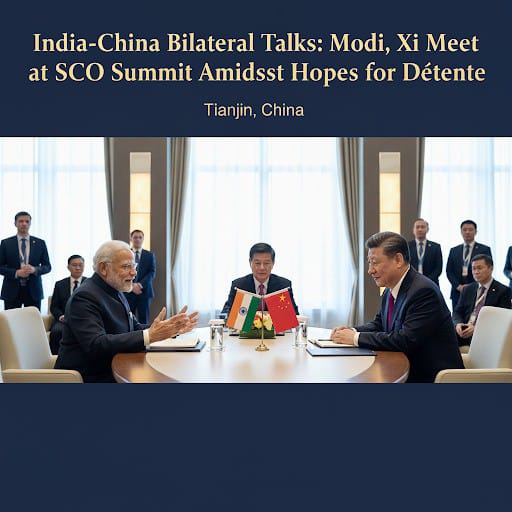
India and China Hold Talks at SCO Summit

Prime Minister Narendra Modi and Chinese President Xi Jinping in bilateral talks at the SCO summit.
Prime Minister Narendra Modi (right) and Chinese President Xi Jinping (left) at the Shanghai Cooperation Organisation (SCO) summit in Tianjin, China.

Indian Prime Minister Narendra Modi and Chinese President Xi Jinping in bilateral talks at the SCO summit.

India China Bilateral Talks: Modi, Xi Meet at SCO Summit Amidst Hopes for Détente

Tianjin, China – In a significant diplomatic development, Prime Minister Narendra Modi and Chinese President Xi Jinping held crucial bilateral talks today on the sidelines of the Shanghai Cooperation Organisation (SCO) summit in Tianjin. The high-level meeting, keenly watched by the international community, marks a renewed effort to address lingering issues and foster greater understanding between the two Asian giants. The discussions, which took place in a cordial yet candid atmosphere, covered a range of subjects critical to both nations’ interests and regional stability. While official readouts from both sides emphasized the positive aspects of the dialogue, the underlying goal remains to navigate the complex relationship, particularly after recent geopolitical tensions and border standoffs

Key Highlights of the Meeting

Sources close to the deliberations indicated that both leaders underscored the importance of maintaining peace and tranquility along the Line of Actual Control (LAC). While specific details of border escalation strategies were not immediately disclosed, the commitment to dialogue as the primary mechanism for resolving such issues was reiterated. This signals a potential thaw in the frozen relationship that has seen sporadic confrontations. Economic cooperation also played a prominent role in the talks. With both India and China being major global financial players, there’s a mutual understanding of the benefits of enhanced trade and investment. Discussions likely touched upon avenues to balance the trade deficit and explore new sectors for collaboration, potentially leveraging each other’s strengths in technology and manufacturing.

Furthermore, regional and global issues of mutual concern were on the agenda. Given the SCO platform, discussions around counter-terrorism, climate change, and multilateral cooperation in various international forums would have been natural points of convergence. Both leaders emphasized the role their nations play in promoting a stable and prosperous Asian century.

The Significance of the SCO Platform

The SCO summit provides a vital platform for leaders from across Eurasia to engage in multilateral and bilateral discussions. For India and China, the setting offered a convenient and conducive environment for direct engagement, away from the often-intense scrutiny of separate, standalone visits. The informal nature of sideline meetings often allows for more frank and open exchanges.

Looking Ahead: A Cautious Optimism

While one meeting cannot resolve all existing challenges, the bilateral talks between PM Modi and President Xi Jinping are undeniably a positive step. They signal a shared recognition of the need for diplomatic engagement to manage differences and explore areas of cooperation. The coming months will reveal the tangible outcomes of these discussions, particularly concerning border stability and economic initiatives.

The global community will be observing closely, hopeful that these talks pave the way for a more cooperative and less confrontational future for India-China relations, crucial for regional peace and global economic dynamism.

Bigg Boss 19Weekend Ka Vaar Highlights

alman Khan scolding Abhishek Bajaj during Bigg Boss 19 Weekend Ka Vaar
Salman Khan warns Abhishek Bajaj to fold his bed and follow house rules on Bigg Boss 19.

Salman Khan scolding Abhishek Bajaj during Bigg Boss 19 Weekend Ka Vaar

Bigg Boss 19 Weekend Ka Vaar: Salman Khan Schools Contestants, Tanya Mittal Breaks Down

Mumbai, August 31, 2025 – The first Weekend KMumbai, August 31, 2025 – The first Weekend Ka Vaar of Bigg Boss 19 proved to be an explosive episode filled with confrontations, emotions, and unexpected twists. Hosted by Salman Khan, the episode highlighted discipline issues, brewing rivalries, and even a hint of romance.A Vaar of Bigg Boss 19 proved to be an explosive episode filled with confrontations, emotions, and unexpected twists. Hosted by Salman Khan, the episode highlighted discipline issues, brewing rivalries, and even a hint of romance.

Salman Khan Rebukes Abhishek Bajaj

The episode opened with Salman Khan addressing Abhishek Bajaj, who has been ignoring household responsibilities. Salman sternly told him, “Folding your bed is a basic duty, not something you should expect others to do.” The statement left Abhishek visibly uncomfortable, setting the tone for a fiery evening.

Tanya Mittal in Tears After Harsh Remarks

One of the most emotional moments of the night was when Tanya Mittal broke down after Salman confronted Pranit More for his unkind words. Salman scolded Pranit for crossing limits, and Tanya, already struggling inside the house, could not hold back her tears. Fans on social media quickly came to her support, making #StayStrongTanya trend online.

Mridul and Natalia’s Chemistry Steals Attention

The episode wasn’t all about drama. Contestants Mridul Tiwari and Natalia Janoszek stole the spotlight when they performed a romantic dance on ‘Dil Diyan Gallan’. The audience and fellow housemates couldn’t stop smiling, and the duo instantly became the talk of the town. Many viewers believe this could be the season’s first love angle.

Farhana Bhatt’s Re-Entry and Clash with Baseer Ali

Adding to the drama, Farhana Bhatt, who was eliminated earlier, made a shocking re-entry from the secret room. Within hours of her comeback, she clashed with Baseer Ali, with both hurling insults and calling each other “gutter.” This fight has already set the stage for high-voltage drama in the coming week.

No Elimination Twist?

Speculation is strong that this week might witness a no-elimination twist. Though several contestants including Gaurav Khanna, Tanya Mittal, and Abhishek Bajaj were nominated, insiders suggest that the makers may surprise both housemates and viewers by keeping everyone safe for another week.

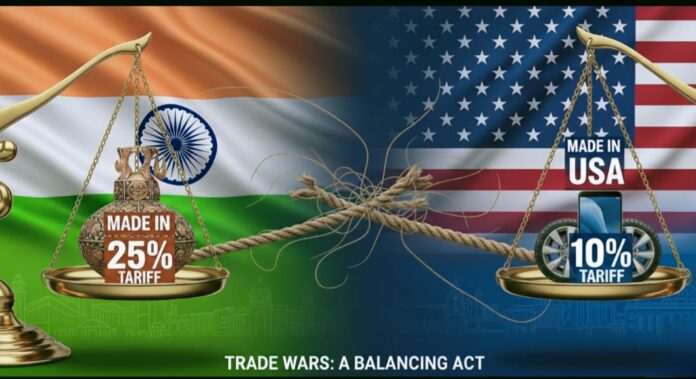
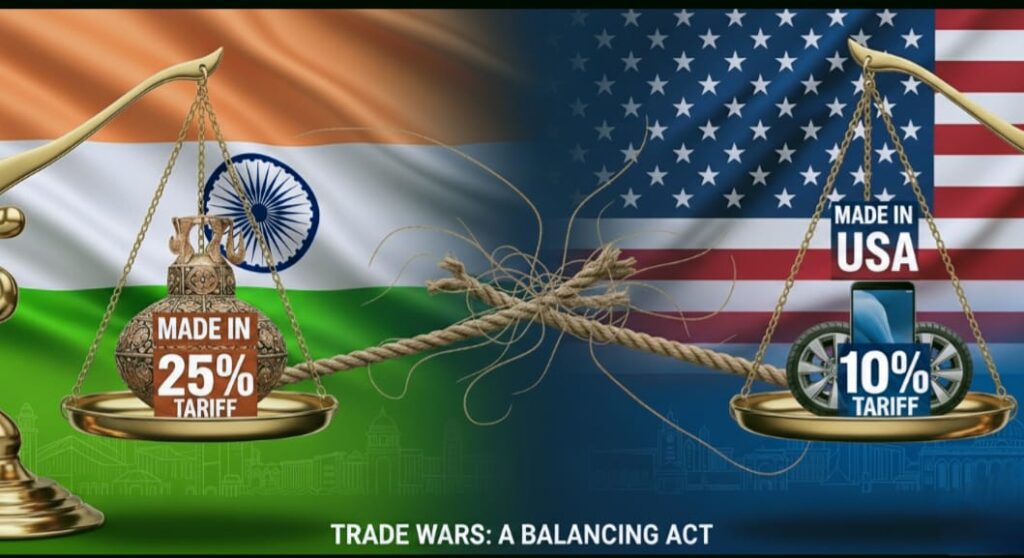
US Puts New Taxes on India What Happens Next?

The United States has put new, higher taxes on products coming from India. This is a big problem that is causing tension between the two countries. The U.S. says it is doing this because India is buying cheap oil from Russia. The U.S. government says this money helps Russia with its war in Ukraine.

India’s Response: We Do What’s Best for Us

India has not backed down. The Indian government says its first job is to get good, cheap energy for its 1.4 billion people. Top leaders like Prime Minister Modi have said that India will not change its mind just because other countries want it to.

Beyond Oil: A Broader Geopolitical Context

This latest development is part of a wider trend of growing friction between the two nations, which have historically been strategic partners. While PM Modi and other Indian leaders have stressed the importance of self-reliance, the US continues to push for nations to align with its geopolitical stance. As the trade dispute intensifies, both countries are navigating a delicate balance between their respective national priorities and the intricate web of global politics.


Bigger Picture: A Growing Disagreement

This fight over taxes is part of a bigger disagreement. Even though India and the U.S. have been partners for a long time, there are growing tensions. Both countries are trying to do what is best for themselves, which is making their relationship more difficul

Add Your India vs USA Quick Guide to the Trade and Economic LandscapeHeading Text Here

Category India United States
Nominal GDP (2025) ~$4.27 trillion ~$30.34 trillion
GDP Per Capita (2025) ~$2,940 ~$89,680
Bilateral Trade (April–July 2025) Exports to US: $33.53 billion
Imports from US: $17.41 billion
Total: $50.94 billion
Exports to India: $17.41 billion
Imports from India: $33.53 billion
Total: $50.94 billion
Trade Balance (April–July 2025) Surplus: +$16.12 billion Deficit: -$16.12 billion
Top Exports to the Other Country Pharmaceuticals, engineering goods, gems & jewelry, textiles, refined petroleum products Mineral fuels, machinery, aircraft, medical equipment, chemicals
Effective Tariff Rate on Imports from the Other Country Average applied rate is generally lower, but India is prepared to impose reciprocal tariffs Latest tariffs have pushed the effective rate on many Indian goods above standard levels