


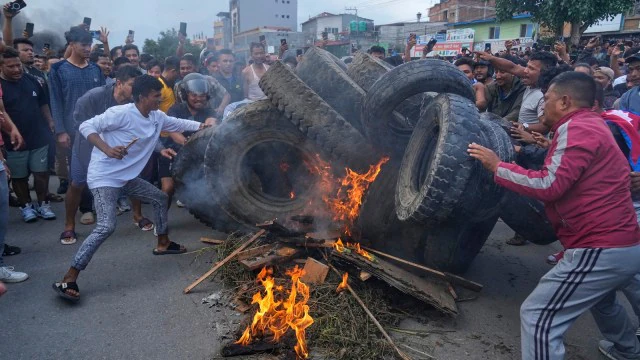
Kathmandu, Nepal – Nepal is facing a deepening political crisis as youth-led “Generation Z” protests against government corruption and a social media ban have turned deadly. The unrest, which has seen clashes with police and the burning of government buildings, led to the resignation of Home Minister Ramesh Lekhak today, a major concession by the government in an attempt to de-escalate tensions
Government Scrambles to Contain Unrest
The protests began as a peaceful demonstration but quickly turned violent, with reports of over a dozen deaths and hundreds of injuries. The youth, who are largely organized through social media, are demanding accountability and a transparent government. While the government has revoked its ban on social media, it has not been enough to quell the fury of the protesters. Prime Minister K.P. Sharma Oli has now called for an emergency all-party meeting to address the crisis, signaling the severity of the situation.
The resignation of the Home Minister is a significant development, but analysts remain skeptical that it alone will satisfy the protesters’ demands. The ongoing unrest poses the biggest challenge to the current administration and highlights a growing disconnect between the youth and the country’s political establishment.